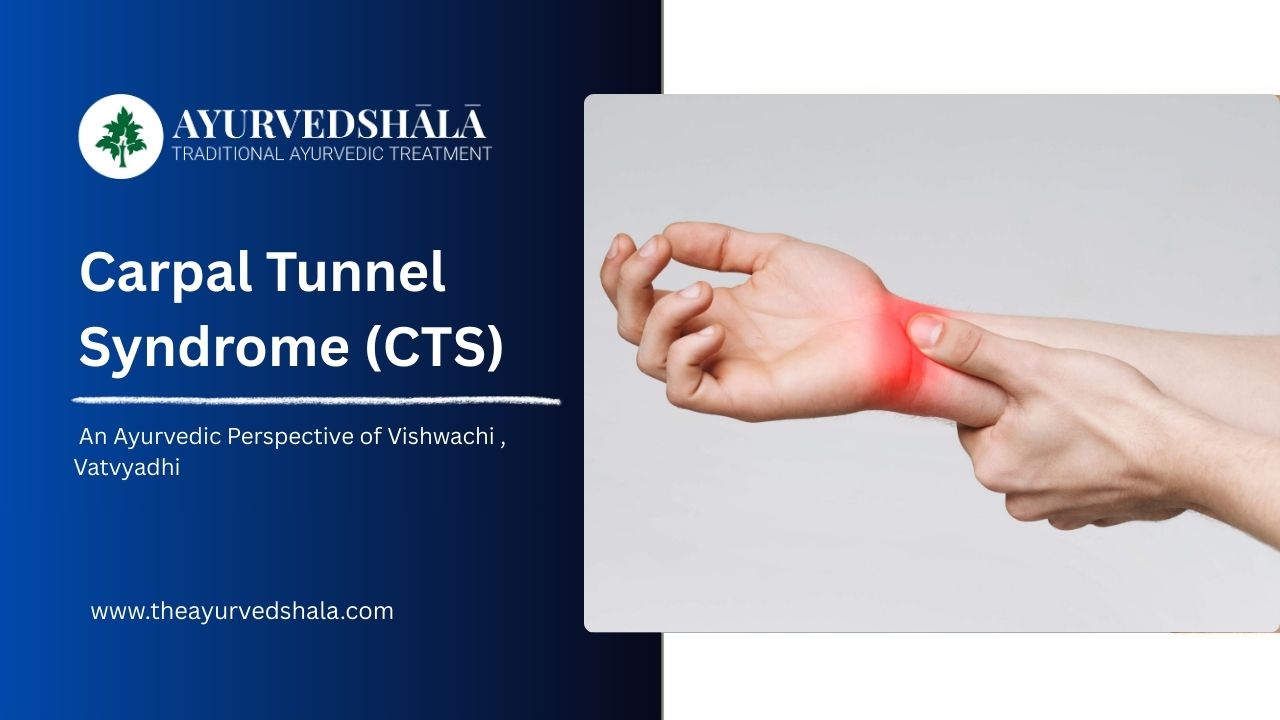
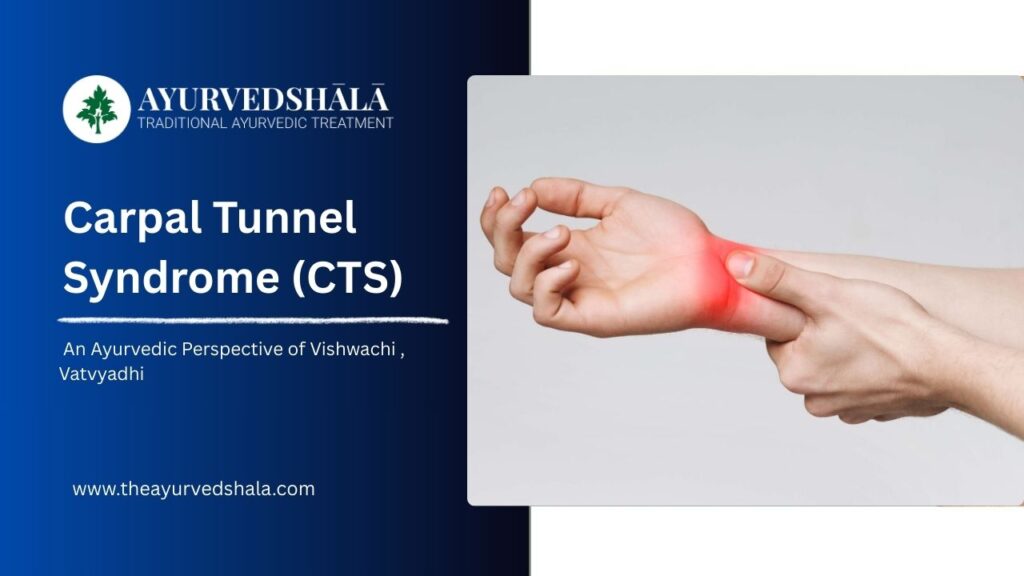
In clinical Ayurvedic practice, patients frequently present with complaints such as numbness of fingers, tingling sensation in the hand, wrist pain, weakness in grip, and difficulty in holding objects. In modern medicine this condition is identified as Carpal Tunnel Syndrome (CTS), which occurs due to compression of the median nerve in the wrist.
From the Ayurvedic perspective, this clinical presentation corresponds closely to Vishwachi, which is classified under Vatvyadhi (disorders caused by aggravated Vata dosha). The pathology primarily involves Vata with Kapha association, where Vata produces neurological symptoms while Kapha contributes to swelling and obstruction within the carpal tunnel.
Thus, CTS can be understood as a condition of Vata–Kapha dushti with Shopa (inflammation) and Avarodha (obstruction) affecting the structures of the wrist.
Understanding the Disease through Ayurveda
According to Ayurvedic principles, Vata dosha governs the nervous system, movement, and sensory functions of the body. When Vata becomes aggravated or obstructed, neurological symptoms such as pain, tingling, numbness, and weakness manifest.
In the case of Carpal Tunnel Syndrome, repetitive strain, prolonged computer work, excessive hand movements, improper posture, or degeneration of tissues leads to Vata prakopa in the wrist region.
At the same time, Kapha dosha accumulates in the confined carpal tunnel space, producing Shopa (swelling) and Avarodha (blockage). This obstruction compresses the nerve passing through the tunnel and results in the typical symptoms of CTS.
Therefore the pathology can be summarized as:
- Dosha: Vata–Kapha
- Avastha: Shopa (inflammation) and Avarodha (obstruction)
- Affected structures: Nadi (nerves), Kandara (tendons), and Snayu (ligaments)
This explains why patients experience neurological symptoms along with stiffness and heaviness of the wrist.
Clinical Features (Lakshana)
Patients suffering from CTS or Vishwachi often complain of:
- Tingling sensation in fingers
- Numbness in the thumb, index, and middle fingers
- Burning or radiating pain in the wrist and forearm
- Weak grip or difficulty holding objects
- Increased symptoms during night
- Stiffness and heaviness in the wrist
From the Ayurvedic point of view, these symptoms clearly indicate Vata vitiation affecting the nerve pathways of the upper limb, along with Kapha-induced swelling creating compression.
Ayurvedic Treatment Principle
The management of this condition in Ayurveda is not limited to symptomatic relief. The treatment is directed towards correcting the underlying dosha imbalance and removing the obstruction affecting the nerve pathway.
The major treatment principles include:
- Vata shamana – pacifying aggravated Vata
- Kapha shamana – reducing Kapha accumulation
- Avarodha nivarana – removing obstruction in channels
- Shopa hara – reducing inflammation
- Strengthening of Kandara and Snayu – restoring tendon and ligament health
For this purpose, a structured therapeutic approach known as the Kandarakshita Vata Protocol is highly beneficial.
Kandarakshita Vata Protocol
The Kandarakshita Vata Protocol is specifically designed for conditions involving ligaments, tendons, and nerve pathways. In many musculoskeletal and neurological disorders affecting the limbs, the root pathology involves weakness or inflammation of these structures.
This protocol aims to:
- Protect and strengthen Kandara (tendons and ligaments)
- Pacify aggravated Vata in nerve channels
- Reduce Kapha-related swelling and obstruction
- Improve local circulation and tissue nourishment
Through this approach, the pressure on the median nerve is gradually reduced and normal function of the wrist can be restored.
Drug of Choice
Varnadi Kashayam
Varnadi Kashayam is a classical Ayurvedic formulation widely used in disorders involving Kapha accumulation and inflammatory swelling.
Its therapeutic actions include:
- Reducing Kapha and localized swelling
- Clearing obstruction in body channels (Srotoshodhana)
- Improving circulation in affected tissues
- Helping relieve heaviness and stiffness
In CTS, this formulation helps reduce Kapha-induced compression inside the carpal tunnel, which indirectly relieves pressure on the nerve.
Rasnasunthyadi Kashayam
Rasnasunthyadi Kashayam is a highly effective formulation used in Vatavyadhi and neuromuscular disorders.
Its primary actions include:
- Strong Vata pacifying effect
- Reduction of pain and stiffness
- Improvement in nerve function
- Restoration of mobility in joints and tendons
When used in conditions like CTS, it addresses the Vata component responsible for nerve irritation, pain, and numbness.
Supportive Ayurvedic Therapies
In addition to internal medicines, Ayurveda emphasizes external therapeutic procedures to accelerate recovery.
Common supportive treatments include:
- Abhyanga – medicated oil massage to pacify Vata
- Swedana – therapeutic sweating to reduce stiffness and inflammation
- Local wrist therapies for strengthening tendons and ligaments
These therapies improve circulation, reduce swelling, and support nerve recovery.
Lifestyle Advice
Patients suffering from CTS should also follow certain lifestyle measures:
- Avoid repetitive wrist strain
- Maintain correct ergonomic posture while working
- Take frequent breaks during typing or manual work
- Perform gentle wrist stretching exercises
- Follow a Vata-pacifying diet consisting of warm, nourishing foods
Avoiding excessive cold exposure, dry foods, and irregular routines is also beneficial in controlling Vata imbalance.
Conclusion
Carpal Tunnel Syndrome can be effectively understood in Ayurveda as Vishwachi, a type of Vatvyadhi involving Vata–Kapha imbalance, inflammation (Shopa), and obstruction (Avarodha) in the wrist region.
Through proper Ayurvedic management including the Kandarakshita Vata Protocol, along with classical medicines like Varnadi Kashayam and Rasnasunthyadi Kashayam, it is possible to address the root cause of the condition rather than merely suppress symptoms.
By combining internal medicines, external therapies, and lifestyle corrections, Ayurveda offers a comprehensive and holistic approach for managing CTS and restoring normal function of the hand and wrist.