
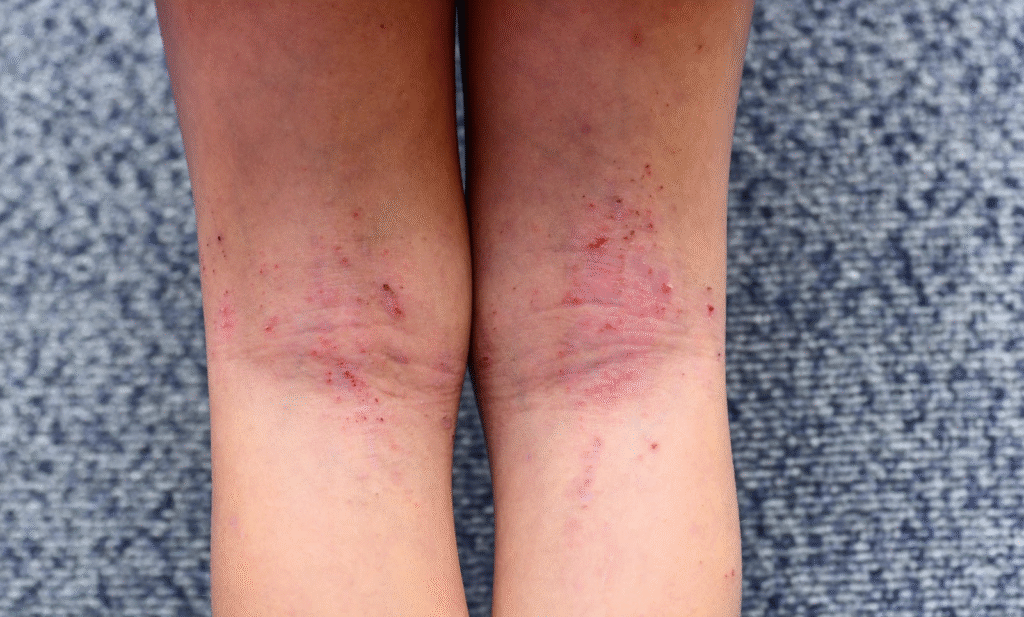
Atopic dermatitis, commonly known as eczema, is a chronic, relapsing inflammatory skin condition characterized by intense itching, redness, scaling, and sometimes oozing lesions. In Ayurveda, this condition is closely aligned with Kushta (skin diseases) or Tvak Vikara (skin disorders), particularly Vicharchika, a subtype of Kshudra Kushta (minor skin diseases). Described in classical Vedic texts such as Charaka Samhita, Sushruta Samhita, Ashtanga Hridaya, Ashtanga Sangraha, Bhavaprakasha, and Madhava Nidana, Vicharchika is marked by symptoms like severe itching (Kandu), papular eruptions (Pidaka), dryness (Shyava), and exudation (Srava), mirroring atopic dermatitis. Ayurveda attributes these conditions to an imbalance of the three doshas (Vata, Pitta, Kapha), impaired digestive fire (Agni), and accumulation of toxins (Ama). In modern allopathy, atopic dermatitis is considered an immune-mediated inflammatory disorder caused by a combination of genetic susceptibility, skin barrier dysfunction, and environmental triggers, with treatment focusing on topical corticosteroids, emollients, antihistamines, and systemic immunomodulators in severe cases. This article provides an in-depth exploration of atopic dermatitis from both Ayurvedic and modern perspectives, incorporating detailed references from Vedic texts, and covering etiology, pathogenesis, symptoms, diagnosis, treatment, prevention, and additional considerations like seasonal influences and psychological factors.
Understanding Atopic Dermatitis in Ayurveda
Ayurveda views skin health as a reflection of internal harmony, with the skin (Tvak) being an extension of the Rasa Dhatu (lymph/plasma) and Rakta Dhatu (blood). Vicharchika, as described in Charaka Samhita (Ch. Chi. 7/30), is a Kapha-Pitta dominant condition with Vata contributing to chronicity and dryness. The texts provide detailed insights into its nature:
- Charaka Samhita (Ch. Chi. 7/26-30): Classifies Kushta as disorders arising from vitiated doshas affecting the Twak (skin), Rakta (blood), Mamsa (muscle), and Ambu (body fluids). Vicharchika is noted for its hallmark symptoms: intense itching, blackish or reddish lesions, and oozing.
- Sushruta Samhita (Su. Ni. 5/13-14): Divides Kushta into Maha Kushta (seven major types) and Kshudra Kushta (eleven minor types), with Vicharchika under the latter, emphasizing its chronic, relapsing nature and external manifestations.
- Ashtanga Hridaya (A.H. Ni. 14/19-21): Highlights the role of improper diet, lifestyle, and environmental triggers in aggravating doshas, leading to skin disorders like Vicharchika.
- Ashtanga Sangraha (A.S. Ni. 14/15): Adds that Vicharchika may involve all three doshas, with Kapha causing oozing, Pitta causing inflammation, and Vata causing dryness and scaling.
- Bhavaprakasha (B.P. Chi. 54/20): Describes Vicharchika as a condition with blackish lesions, intense itching, and pain, often exacerbated by poor digestion.
- Madhava Nidana (M.N. 49/14-16): Provides a detailed symptomatology, linking Vicharchika to Ama accumulation and dosha imbalance, particularly Kapha and Pitta.
Causes (Nidana) of Atopic Dermatitis
Ayurveda identifies a range of causative factors (Nidana) for Vicharchika, categorized into dietary (Aharaja), lifestyle (Viharaja), environmental (Kala-related), and psychological (Manasika) triggers, as outlined in classical texts.
Dietary Causes (Aharaja Nidana)
Charaka Samhita (Ch. Chi. 7/4-8) and Sushruta Samhita (Su. Ni. 5/3-5) list:
- Incompatible Foods (Viruddha Ahara): Consuming milk with fish, sour foods with dairy, or heating foods with cooling ones disrupts digestion, producing Ama. For example, Charaka Samhita (Ch. Su. 26/81-86) lists 18 types of food incompatibilities.
- Excessive Heavy Foods: Overconsumption of oily, fried, or sweet foods aggravates Kapha and Pitta.
- Improper Eating Habits: Eating during indigestion (Ajirna), irregular meal timings, or overeating weakens Agni, leading to toxin accumulation.
- Specific Triggers: Excessive use of sour (Amla), salty (Lavana), or pungent (Katu) foods, as well as alcohol, aggravates Pitta and Kapha.
- Processed & Junk Foods: Modern packaged snacks like chips, namkeens, and fried fast foods contain additives, excess salt, and unhealthy fats that dull Agni, aggravate Kapha, and promote Ama formation.
Lifestyle Causes (Viharaja Nidana)
Sushruta Samhita (Su. Ni. 5/6-8) and Ashtanga Hridaya (A.H. Su. 2/10-12) emphasize:
- Suppression of Natural Urges (Vega Dharana): Suppressing urges like vomiting, urination, or defecation leads to dosha vitiation and toxin buildup.
- Poor Hygiene: Infrequent bathing or using harsh soaps disrupts the skin’s natural barrier, aggravating Vata and Pitta.
- Physical Overexertion: Excessive exercise or exposure to heat (Atapa Sevana) aggravates Pitta, while sudden temperature changes disturb Vata.
- Sleep Disturbances: Daytime sleep (Divaswapna) or irregular sleep patterns aggravate Kapha and Vata.
Environmental and Seasonal Factors (Kala-related Nidana)
Ashtanga Hridaya (A.H. Ni. 14/5-6) notes:
- Seasonal Changes (Rutu Sandhi): Monsoon (Varsha) and spring (Vasanta) aggravate Kapha and Pitta, triggering flare-ups.
- Exposure to Allergens: Dust, pollen, or damp environments can exacerbate symptoms, as noted in Bhavaprakasha (B.P. Chi. 54/10).
- Extreme Weather: Excessive heat or cold disrupts dosha balance, particularly Vata and Pitta.
Psychological Factors (Manasika Nidana)
Charaka Samhita (Ch. Ni. 7/15) and Ashtanga Sangraha (A.S. Su. 1/25) highlight:
- Stress and Anxiety (Chinta): Emotional imbalances disturb Vata and Pitta, worsening skin conditions.
- Anger (Krodha): Aggravates Pitta, leading to inflammation and redness.
- Grief (Shoka): Impacts Rasa Dhatu, weakening skin immunity.
Pathogenesis (Samprapti)
The pathogenesis of Vicharchika is detailed in Charaka Samhita (Ch. Chi. 7/9-12) and Madhava Nidana (M.N. 49/10-12):
- Dosha Vitiation: Improper diet and lifestyle vitiate Kapha and Pitta, with Vata contributing in chronic cases.
- Impaired Digestion (Mandagni): Weak digestive fire leads to Ama formation, which mixes with Rasa and Rakta Dhatus.
- Spread to Skin: Vitiated doshas and Ama localize in the skin (Tvak), blood (Rakta), and lymph (Rasa), causing inflammation, itching, and lesions.
- Chronicity: Prolonged imbalance leads to deeper Dhatu involvement (Mamsa and Meda), making the condition chronic.
Sushruta Samhita (Su. Ni. 5/10) adds that the skin’s microchannels (Srotas) become blocked, exacerbating symptoms like oozing and scaling.
Symptoms (Lakshana)
The clinical features of Vicharchika align closely with atopic dermatitis, as described across texts:
- Itching (Kandu): Severe, often nocturnal, due to Kapha (Charaka Samhita, Ch. Chi. 7/30).
- Eruptions (Pidaka): Papules or vesicles, sometimes oozing, indicating Kapha-Pitta imbalance (Sushruta Samhita, Su. Ni. 5/14).
- Dryness (Shyava or Rukshata): Scaling or cracked skin, linked to Vata (Ashtanga Hridaya, A.H. Ni. 14/20).
- Redness (Raga): Inflammation due to Pitta.
- Oozing (Srava): Wet lesions or discharge, typical of Kapha dominance.
- Pain (Vedana): Mild to moderate, especially in chronic cases (Bhavaprakasha, B.P. Chi. 54/21).
- Hyperpigmentation: Blackish or reddish discoloration in chronic cases (Madhava Nidana, M.N. 49/15).
Diagnosis (Nidana Panchaka)
Ayurveda employs Nidana Panchaka for a comprehensive diagnosis, as outlined in Charaka Samhita (Ch. Ni. 1/7-10):
- Nidana (Cause): Identifying dietary, lifestyle, or environmental triggers through patient history.
- Purvarupa (Prodromal Symptoms): Early signs like mild itching, skin sensitivity, or dryness (Charaka Samhita, Ch. Ni. 5/10).
- Rupa (Clinical Features): Observing symptoms like itching, redness, oozing, and scaling.
- Upashaya-Anupashaya (Therapeutic Trial): Relief with cooling herbs (e.g., neem, sandalwood) suggests Pitta involvement, while aggravation with oily foods indicates Kapha.
- Samprapti (Pathogenesis): Assessing dosha dominance and Ama through pulse diagnosis (Nadi Pariksha), skin examination, and digestive history.
Additional diagnostic tools include:
- Tongue Examination: Coated tongue indicates Ama.
- Pulse Diagnosis: Rapid pulse suggests Pitta; sluggish pulse indicates Kapha.
- Skin Texture: Dry, rough skin points to Vata; red, inflamed skin to Pitta; oozing to Kapha.
Ayurvedic Management of Atopic Dermatitis
Ayurvedic treatment aims to balance doshas, eliminate Ama, strengthen digestion (Agni), and restore skin health. It involves detoxification (Shodhana), palliative care (Shamana), external therapies, diet, and lifestyle modifications, as detailed in Vedic texts.
1. Detoxification (Shodhana)
Panchakarma therapies, as per Charaka Samhita (Ch. Chi. 7/39-44) and Sushruta Samhita (Su. Chi. 9/3-10), are tailored to dosha dominance:
- Vamana (Therapeutic Vomiting): For Kapha dominance, using Madanaphala (Randia dumetorum) with licorice decoction to expel excess mucus.
- Virechana (Purgation): For Pitta, using Triphala, Avipattikar Churna, or Trivrit (Operculina turpethum) to detoxify the liver and blood.
- Basti (Medicated Enema): For Vata, using Dashamoola Taila or Tiktaka Ghrita to nourish and balance.
- Raktamokshana (Bloodletting): In cases of Rakta vitiation, using leech therapy (Jalaukavacharana) to purify blood (Sushruta Samhita, Su. Chi. 9/5).
- Nasya (Nasal Administration): For associated respiratory symptoms, using Anu Taila to clear Kapha from the head region (Ashtanga Hridaya, A.H. Su. 20/10).
2. Internal Medicines (Shamana)
Herbal formulations and single herbs are used to pacify doshas and heal the skin, as per Bhavaprakasha and Ashtanga Hridaya:
- Single Herbs:
- Neem (Azadirachta indica): Blood purifier, anti-inflammatory, reduces Pitta and Kapha (Bhavaprakasha, B.P. Chi. 54/25).
- Manjistha (Rubia cordifolia): Detoxifies Rakta, soothes Pitta.
- Guduchi (Tinospora cordifolia): Immunomodulator, balances all doshas.
- Turmeric (Curcuma longa): Anti-inflammatory, antimicrobial, reduces Ama.
- Khadira (Acacia catechu): Blood purifier, heals skin lesions.
- Haridra (Curcuma longa): Reduces inflammation and itching.
- Formulations:
- Kaishore Guggulu: Reduces Pitta and Kapha, purifies blood.
- Mahatiktaka Ghrita: Cooling, soothes Pitta, heals chronic lesions.
- Panchatikta Ghrita: Bitter herbs for detoxification and skin repair.
- Mulakadi Kashayam: Supports digestion, balances Kapha, and helps in clearing skin toxins.
- Mulakasavam: Improves metabolism, reduces Ama, and aids in chronic skin disorders.
- Dosage: Typically, 250-500 mg of tablets or 5-10 ml of Ghrita twice daily, adjusted based on patient’s Agni and dosha status.
3. External Therapies
External applications reduce local inflammation and promote healing, as per Sushruta Samhita (Su. Chi. 9/10-15):
- Lepa (Herbal Pastes):
- Paste of neem, turmeric, and sandalwood (Chandana) to reduce itching and inflammation.
- Sariva (Hemidesmus indicus) and Lodhra (Symplocos racemosa) paste for cooling and healing.
- Bakuchi (Psoralea corylifolia) paste for chronic, dry lesions.
- Abhyanga (Oil Massage):
- Eladi Taila for Kapha-dominant oozing lesions.
- Nalpamaradi Taila for inflammation and discoloration.
- Chemprutyadi Taila: Effective in itching, scaling, and chronic skin eruptions.
- Durvadi Kera Tailam: Cooling, soothing, and useful for burning, redness, and allergic skin conditions.
- Seka (Herbal Washes):
- Decoction of Triphala, neem, or Panchavalkala (five barks) to cleanse lesions.
- Rose water or aloe vera juice for cooling Pitta.
- Avagahana (Medicated Baths): Soaking in Triphala or neem decoction to reduce inflammation (Ashtanga Hridaya, A.H. Chi. 19/10).
4. Diet (Pathya)
Diet plays a critical role in managing Vicharchika, as outlined in Charaka Samhita (Ch. Chi. 7/82-85):
- Favorable Foods (Pathya):
- Light, warm foods like mung dal, red rice, and barley to strengthen Agni.
- Bitter vegetables (bitter gourd, neem leaves) to pacify Pitta.
- Cooling foods like cucumber, pomegranate, and ghee for Pitta.
- Spices like turmeric, cumin, and coriander to enhance digestion.
- Foods to Avoid (Apathya):
- Heavy, oily foods (fried items, cheese).
- Sour and salty foods (pickles, fermented items).
- Incompatible foods (Viruddha Ahara), such as milk with fruits.
- Seafood, red meat, and excessive sweets, which aggravate Kapha and Pitta.
- Meal Timing: Regular, small meals to support Agni, avoiding eating during indigestion.
5. Lifestyle (Vihara)
Ashtanga Hridaya (A.H. Su. 2/15-20) recommends:
- Hygiene: Use mild, herbal cleansers (e.g., Ubtan with chickpea flour and turmeric) instead of chemical soaps.
- Stress Management: Practice yoga (Surya Namaskar, Bhujangasana) and Pranayama (e.g., Anuloma-Viloma) to balance Vata and Pitta.
- Clothing: Wear loose, natural fabrics like cotton to prevent irritation.
- Sleep: Maintain a regular sleep schedule (10 PM to 6 AM) to balance Vata.
- Avoid Extremes: Limit exposure to excessive heat, cold, or humidity.
6. Seasonal Regimen (Rutu Charya)
Ashtanga Hridaya (A.H. Su. 3/1-10) emphasizes seasonal adjustments:
- Monsoon (Varsha): Use drying herbs like Trikatu to counter Kapha.
- Spring (Vasanta): Undergo Vamana or Virechana to prevent Kapha-Pitta flare-ups.
- Summer (Grishma): Cooling therapies like sandalwood paste and rose water.
- Winter (Hemanta): Warm oils (Abhyanga) to pacify Vata.
Prevention (Nidana Parivarjana)
Preventive measures focus on avoiding causative factors (Charaka Samhita, Ch. Ni. 5/6-8):
- Avoid incompatible foods and irregular eating habits.
- Do not suppress natural urges like urination or vomiting.
- Practice seasonal detoxification (Rutu Shodhana) to prevent Ama buildup.
- Use hypoallergenic, natural skincare products.
- Manage stress through meditation and mindfulness practices (Ashtanga Sangraha, A.S. Su. 4/20).
Prognosis (Sadhya-Asadhyata)
Charaka Samhita (Ch. Chi. 7/52-54) classifies Vicharchika as:
- Sadhya (Curable): Early-stage cases with single dosha involvement, treated with proper Shodhana and Shamana.
- Yapya (Manageable): Chronic cases with multiple dosha involvement, requiring long-term care.
- Asadhya (Incurable): Rare, when all dhatus (tissues) are involved, though manageable with palliative care.
Psychological and Social Considerations
Ayurveda recognizes the mind-body connection in skin disorders. Charaka Samhita (Ch. Ni. 7/15) notes that stress and negative emotions exacerbate Vicharchika. Counseling, meditation, and community support can improve outcomes. Patients should be educated about the chronic nature of the condition to set realistic expectations.
Case-Specific Considerations
- Pediatric Cases: Use milder herbs like Sariva and avoid strong Panchakarma (Ashtanga Hridaya, A.H. Ut. 1/20).
- Pregnancy: Avoid Virechana and use safe herbs like sandalwood paste and Guduchi (Charaka Samhita, Ch. Sha. 8/20).
- Chronic Cases: Combine Raktamokshana with long-term Guggulu formulations.
Conclusion
Atopic dermatitis, or Vicharchika, is a complex condition rooted in dosha imbalance, Ama accumulation, and external triggers. Drawing from Charaka Samhita, Sushruta Samhita, Ashtanga Hridaya, Ashtanga Sangraha, Bhavaprakasha, and Madhava Nidana, Ayurveda offers a holistic approach through detoxification, herbal remedies, dietary adjustments, lifestyle changes, and seasonal regimens. By addressing the root causes and promoting balance, Ayurveda provides effective management and prevention strategies, ensuring long-term skin health and overall well-being.