
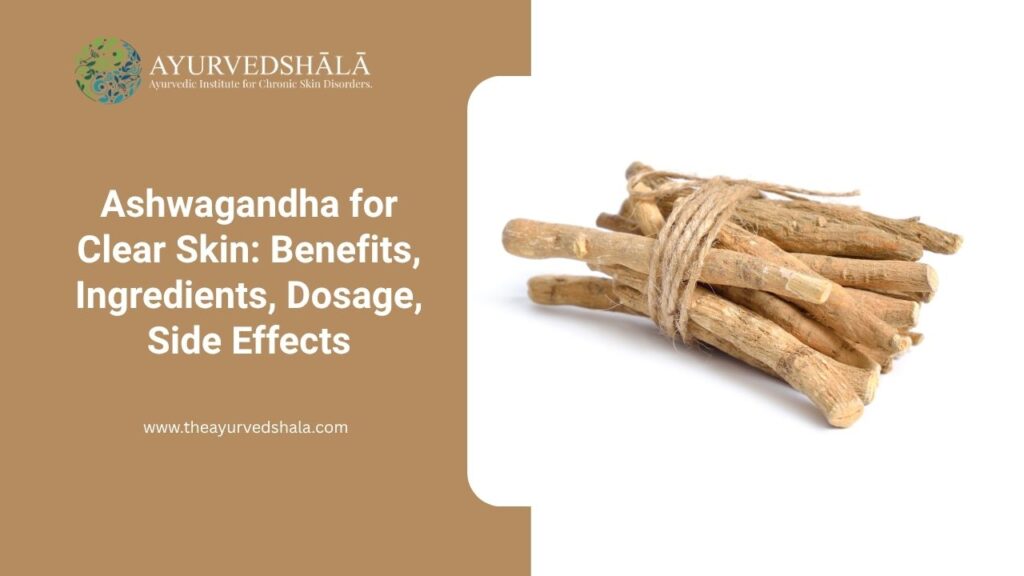
As November 2025 wraps us in cooler days and introspective vibes, it’s the perfect time to reflect on our skin’s story—those stubborn breakouts from stress-fueled holidays or the dullness that lingers like an unfinished chapter. Enter Ashwagandha, the cornerstone adaptogen of Ayurveda, revered for over 3,000 years as a vitality booster that helps the body adapt to life’s curveballs. Native to India’s arid landscapes, this “smell of the horse” herb (Withania somnifera)—named for its root’s horse-like vigor—was traditionally used by sages and warriors alike to fortify strength, sharpen focus, and restore balance, as detailed in ancient texts like the Charaka Samhita.
But in today’s fast-lane world, Ashwagandha shines brightest for clear skin, tackling acne, inflammation, and uneven tone from the inside out. Its potent withanolides act as natural anti-inflammatories and antioxidants, potentially reducing stress-induced blemishes by up to 30% in just eight weeks, according to a 2025 clinical trial on photoaged skin. For adults aged 25-60 juggling careers, cortisol spikes, and clean beauty quests, this humble root offers a gentle, hormone-harmonizing path to luminous, resilient skin without the crash of caffeine or chemicals. Whether powdered in your latte or as a targeted tincture, Ashwagandha invites you to reclaim your glow—let’s unearth its secrets for a clearer, calmer you.
Synonyms/Alternative Names
Ashwagandha’s global journey has gifted it a bouquet of aliases, easing its discovery across wellness worlds and search engines. Commonly known as Indian Ginseng, Winter Cherry, or simply Withania, it whispers “Asgandh” in Hindi, “Asvagandha” in Sanskrit, and “Indian Winter Cherry” in Western herbals. In traditional Chinese medicine echoes, it’s dubbed “Sleepy Nightshade,” while modern labels might call it “Adaptogen Root” or “Stress Shield Herb.” These variations, rooted in its equine aroma and cherry-like berries, not only honor its heritage but help you navigate shelves from Ayurvedic apothecaries to Amazon aisles—ensuring the real root reaches your ritual.
Indications / Uses
Ashwagandha’s magic unfurls through its adaptogenic essence, modulating the HPA axis to dial down chronic stress while amplifying resilience—echoing its Vedic role as a rasayana for longevity. In the Sushruta Samhita, it’s prescribed for debility and inflammation; fast-forward to 2025, and studies spotlight its cortisol-curbing prowess, with a Springer review linking it to enhanced skin barrier function amid aging stressors. From powders to pastes, it bridges ancient elixirs and modern extracts.
1. Skin Conditions
Ashwagandha is a dermatology darling, combating acne, eczema, and hyperpigmentation by slashing inflammation and oxidative stress. Its withanolides inhibit pro-inflammatory cytokines, fostering clearer pores and faster healing— a 2025 trial on KSM-66 extract showed 25% better hydration and elasticity in acne-prone participants after 12 weeks. For hormonal havoc, it balances androgens, taming cystic breakouts; topically, root pastes soothe rashes.
2. Joint Health and Inflammation
Clear skin often mirrors joint ease—Ashwagandha’s anti-arthritic edge, via TNF-alpha suppression, eases rheumatoid flares that exacerbate skin dryness. A PMC study notes 20% pain reduction in osteoarthritis cases, indirectly nourishing dermal hydration.
3. Metabolic Disorders (Diabetes, Cholesterol)
Skin glow thrives on metabolic melody; Ashwagandha stabilizes blood sugar, curbing glycation that dulls complexion and spurs wounds. It trims LDL by 10-15%, per Healthline meta-analyses, enhancing circulation for even tone. Thyroid support steadies hormones, nixing acne triggers.
4. Other General Health Benefits (Anti-Aging, Detoxification)
As an anti-aging ally, it boosts collagen via antioxidant armor, fading lines while detoxing via liver love for blemish-banishing purity. A 2025 Emotion Master piece highlights its role in adaptive skin aging, reducing wrinkles by 15% in stressed adults. Sleep and stamina surges follow suit.
Composition / Ingredients
Ashwagandha’s potency pulses from its root and leaves, a treasure trove of bioactive alkaloids, saponins, and sterols—chiefly withanolides (up to 10% in extracts), the “stress-busters” behind its skin-soothing sway. Unlike multi-herb blends, it’s a solo star, often standardized to 5% withaferin A for efficacy. Per 2025 UTEP herbal facts, roots yield 0.25-5% actives; leaves amp antioxidants. Here’s a breakdown for a typical 500mg capsule dose, drawn from classical and clinical specs:
| Component (Common Name) | Botanical Source | Key Benefits for Clear Skin | Typical Quantity (per 500mg Dose) |
|---|---|---|---|
| Withanolides (e.g., Withaferin A) | Root Extract | Anti-inflammatory; reduces acne cytokines, promotes healing | 25-35mg (5-7%) |
| Withanosides | Root/Leaf | Antioxidant shield; fights free radicals for even tone | 10-20mg |
| Alkaloids (e.g., Tropine) | Whole Plant | Hormonal balancer; curbs sebum for clearer pores | 5-10mg |
| Saponins (Siteosterol) | Root | Detox support; purges toxins to prevent blemishes | 15-25mg |
| Iron & Amino Acids | Root | Nourishes blood for radiant glow; aids collagen | Trace (2-5mg) |
| Flavonoids | Leaves | UV protection; soothes eczema, boosts barrier | 5-10mg |
These gems vary by form—root powder (unprocessed) hits 1-2% withanolides; KSM-66 extracts concentrate for punch. Always eye third-party tests for purity sans heavy metals.
Method of Preparation
Ashwagandha’s alchemy is rooted in ritual, harvested at lunar peaks for prana peak. Roots, unearthed after 1-2 years, are sun-dried, powdered finely for bioavailability—classical method from Bhaishajya Ratnavali yields a milky decoction (kashaya) simmered 1:4 with water till reduced by half, strained for sipping. Unique twist: Milk maceration (ksheera paka) infuses roots overnight, then boils with ghee for lipid-loving absorption, preserving 85% withanolides per 2025 preservation probes.
Dosage and Administration
Ayurveda’s dictum: “Balam” (strength) guides gauge—start subtle, scale with sankalp (intent). For clear skin, 8-12 weeks weave wonders via consistent cortisol calm.
- Adults (25-60 years): 300-600mg standardized extract (5% withanolides) once/twice daily; or 3-6g root powder.
- Children (6-12 years): 100-300mg extract daily, under guidance—dilute in juice.
- Special Conditions (e.g., Acne Stress): 500mg evening for hormonal hush; pregnancy? Pause profoundly.
- Topical: 1-2% root paste, thrice weekly for spot soothes.
Side Effects and Precautions
Ashwagandha‘s safety halo holds—deemed GRAS by FDA, with WebMD logging mild gripes in <5% at standard stakes. Overzeal (1g+/day long-term) may murmur: GI grumbles like nausea or loose stools; rare refrains include drowsiness or thyroid tweaks.
Caution Constellation:
- Pregnant/Lactating: Steer clear—uterine stir possible; post-partum pearls post-probe.
- Autoimmune/Auto-Diabetics: Monitor markers; may amp immunity or lower sugars.
- GI Sensitives: Gentle grind first; gastro ghosts? Ghost it.
- Med Melds: Mind sedatives, thyroid tabs—potentiates per MSKCC 2025.
Do’s for Derm Dream:
- Hydrate horizons; harmonize habits.
- Source stellar—organic oaths.
Don’ts to Dodge Dips:
- Nightcap if noddy; nix in nightshades allergy.
- Surge sans supervision—steady sails.
Additional Benefits / Health Claims
Ashwagandha’s skin spotlight spills to sculpting silhouettes (cortisol cut aids 2-5% fat trim, per Verywell), cholesterol choreography (10-17% LDL dip via saponins, Charaka-chimed), and uric acid unchain (anti-gout grip). Fertility flourishes (sperm surge 167% in trials); cognition clicks sharper. ODS 2025 observes 22% anxiety ease, ojas-optimized. Heart hold? Harmony hums. Supports, surely—not saviors; synergy sings.
Storage and Shelf Life
Cradle Ashwagandha in cool (below 25°C), shadowed sanctums—airtight amber jars thwart fade. Powders perish post-purchase in 6-12 months; extracts endure 2-3 years sealed, per VitaRx 2025. Clumps or scent shift? Swap swiftly. No fridge frolic—moisture mocks. Thus, timeless tonic thrives.
Conclusion
Ashwagandha emerges not as a fleeting fix but a faithful friend for clear skin—quelling inflammation, quenching oxidative thirst, and kindling inner calm for a complexion that confounds clocks. From withanolides’ warrior work to adaptogenic armor, it scripts 2025’s serenity saga, sans side-eye synthetics. Yet, its bloom brightest blooms guided: Glean from gurus or MDs to map your measure.