




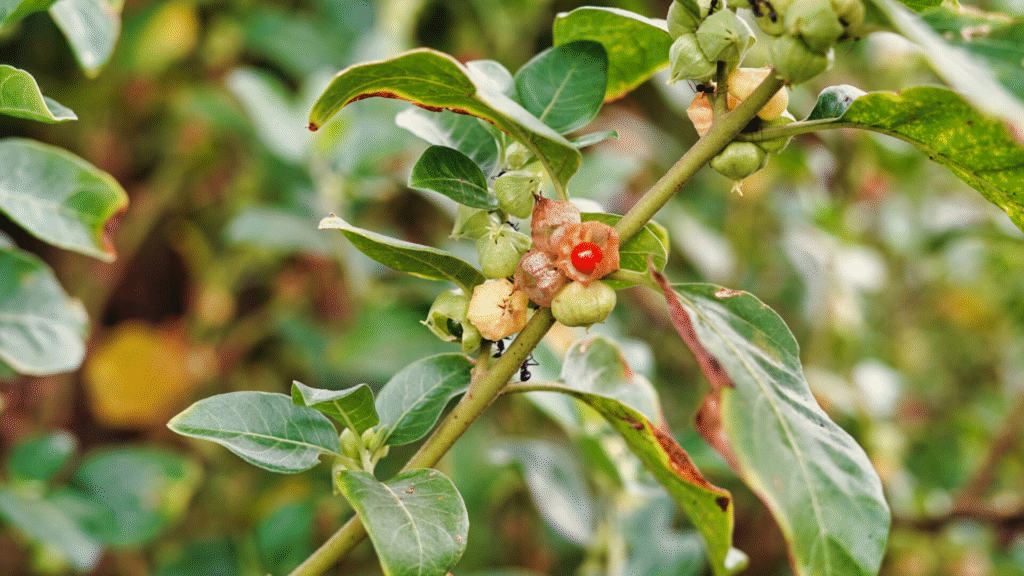
Ashwagandha, a powerful Rasayana in Ayurveda, is known for vitality, stress relief, and rejuvenation. Learn its classical references, properties, health benefits, and modern scientific validation.
Introduction
Ashwagandha, often referred to as the “Indian Ginseng,” has been a cornerstone of Ayurvedic medicine for over 3,000 years. Its name translates to “the strength and smell of a horse,” symbolizing vitality, energy, and stamina. In Ayurveda, Ashwagandha is classified as a Rasayana, supporting longevity, stress management, and reproductive health.
Classical Reference
From Bhavaprakasha Nighantu:
“Balyaṃ Rasāyanaṃ Vṛṣyaṃ Vātaśleṣmaharaṃ param”
(Ashwagandha provides strength, acts as a rejuvenator, aphrodisiac, and pacifies Vata and Kapha.)
Ayurvedic Properties of Ashwagandha
- Rasa (Taste): Tikta (bitter), Kashaya (astringent), Madhura (sweet)
- Guna (Qualities): Laghu (light), Snigdha (unctuous)
- Virya (Potency): Ushna (hot)
- Vipaka (Post-digestive effect): Madhura (sweet)
- Prabhava (Unique action): Adaptogenic Rasayana
Therapeutic Uses in Ayurveda
- Nervous System Support
- Reduces stress and anxiety.
- Enhances memory and concentration.
- Energy & Stamina
- Boosts physical strength and recovery.
- Supports athletes and individuals with fatigue.
- Reproductive Health
- Aphrodisiac properties support fertility in men and women.
- Balances hormones naturally.
- Immunity & Anti-aging
- Strengthens immunity.
- Delays aging with Rasayana effects.
Modern Scientific Perspective
Ashwagandha is widely studied for its adaptogenic properties. Clinical trials show it reduces cortisol (stress hormone), enhances endurance, and improves thyroid function. Studies also support its role in reducing anxiety and supporting male fertility.
FAQs about Ashwagandha
Q1. Can Ashwagandha help with sleep?
Yes, it calms the nervous system and promotes better sleep.
Q2. Who should avoid Ashwagandha?
Pregnant women and people with hyperthyroidism should consult a doctor before use.
Q3. Is Ashwagandha safe for long-term use?
Yes, when taken in recommended doses, it is safe and highly beneficial.
Conclusion
Ashwagandha embodies the essence of strength, vitality, and rejuvenation. Bridging classical Ayurveda and modern science, it remains one of the most trusted herbs for resilience and longevity.