




A. Introduction
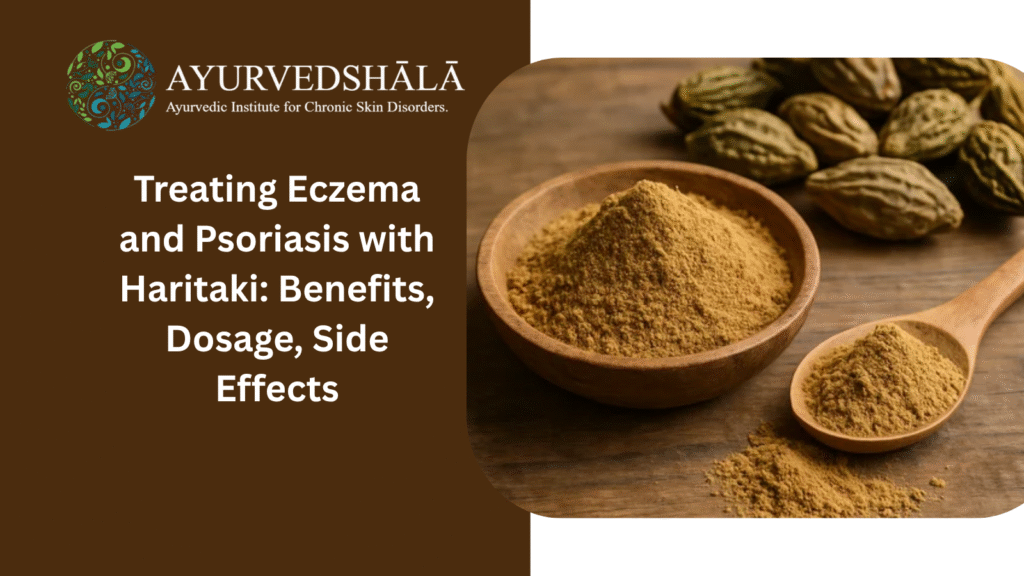
Haritaki, a cornerstone of Ayurvedic medicine for over 2,000 years, is the dried fruit of Terminalia chebula, revered in ancient texts like the Charaka Samhita as the “king of medicines.” Traditionally used as a rejuvenative tonic (rasayana), haritaki supports digestion, detoxification, and overall vitality. In modern Ayurvedic practice, it gains recognition for its anti-inflammatory, antioxidant, and antimicrobial properties, making it a promising natural aid for managing chronic skin conditions such as eczema and psoriasis. By balancing Vata and Kapha doshas while gently cleansing the body, haritaki helps address the root causes of skin flare-ups without harsh chemicals.
B. Synonyms/Alternative Names
Also known as Harad, Chebulic myrobalan, Black myrobalan, Inknut, Harde, Karakkaya (Tamil), or Abhaya in Sanskrit.
C. Indications / Uses
1. Skin Conditions
Haritaki is traditionally prescribed for inflammatory skin disorders. Its astringent and detoxifying actions help reduce itching, redness, and scaling in eczema (Vicharchika) and psoriasis (Kitibha). It purifies the blood (rakta shodhana), removes excess Pitta and Kapha from the skin channels (srotas), and promotes healing of lesions.
2. Joint Health and Inflammation
The herb’s anti-inflammatory compounds support joint mobility and reduce swelling, often combined with guggulu resins for conditions like gout or rheumatoid arthritis that may accompany skin issues.
3. Metabolic Disorders
Haritaki aids in regulating blood sugar and cholesterol, which can indirectly benefit skin health by reducing systemic inflammation linked to diabetes or obesity-related psoriasis.
4. Other General Health Benefits
- Detoxification: Acts as a mild laxative to eliminate ama (toxins).
- Anti-aging: Rich in vitamin C and tannins for collagen support.
- Immunity: Enhances ojas (vital essence) to prevent recurrent infections.
- Commonly combined in Triphala (with amalaki and bibhitaki) for enhanced skin benefits or as a standalone churna in medicated ghee for topical application.
D. Composition / Ingredients
Haritaki fruit (Terminalia chebula Retz.) is used in its pure, dried form. Key bioactive components include:
- Chebulinic acid and chebulagic acid (tannins): Anti-inflammatory and antioxidant; inhibit histamine release in eczema.
- Gallic acid and ellagic acid: Antimicrobial; combat secondary bacterial infections in psoriasis plaques.
- Anthraquinones (in trace amounts): Gentle laxative effect for detoxification.
- Vitamin C, flavonoids, and polyphenols: Support skin repair and UV protection.
E. Method of Preparation (Optional)
Authentic haritaki is harvested from mature trees in Himalayan foothills, sun-dried, and powdered while retaining the seed (for stronger laxative effect) or de-seeded (milder). Traditional texts recommend roasting in ghee or decoction in milk to enhance skin-specific benefits and reduce astringency.
F. Dosage and Administration
- Adults: 1–3 grams of haritaki powder (1/2–1 tsp) once or twice daily, or 1–2 tablets (500 mg each).
- For skin conditions: Start with 1 gram at night with warm water or Triphala decoction; increase gradually if tolerated.
- Children (above 5 years): 500 mg–1 gram daily, under supervision.
- Best practices: Take after meals with warm water, ghee, or honey to improve absorption and reduce gastric irritation. For topical use, mix powder with sesame oil for paste application on affected areas. Cycle: 4–6 weeks, followed by a break.
G. Side Effects and Precautions
- Common side effects: Mild loose stools or abdominal cramps if dosage exceeds tolerance (due to laxative action).
- Who should avoid:
- Pregnant or lactating women (may stimulate uterine contractions).
- Individuals with severe diarrhea, dehydration, or emaciation.
- Those on blood thinners (potential interaction with tannins).
- Do’s and don’ts: Start low and slow; stay hydrated; avoid during acute illness or fasting. Always consult an Ayurvedic physician or dermatologist, especially if on allopathic medications for eczema/psoriasis.
H. Additional Benefits / Health Claims
Beyond skin relief, haritaki supports weight management by improving metabolism, lowers uric acid in gout-related psoriasis, and enhances hair health by reducing scalp inflammation. Classical texts like Sushruta Samhita praise it for wound healing, while preliminary studies note reduced oxidative stress markers in chronic skin patients.
J. Storage and Shelf Life
Store in an airtight container in a cool, dry place away from sunlight. Powder form: 2–3 years; tablets: 3 years from manufacture. Discard if clumped or moldy.
K. Conclusion
Haritaki offers a time-tested, holistic approach to managing eczema and psoriasis through detoxification, inflammation control, and skin nourishment. While its gentle efficacy makes it a valuable addition to natural skincare routines, results vary by individual constitution. Always consult a qualified healthcare professional before starting haritaki to ensure safe, personalized use and avoid interactions with existing treatments.