




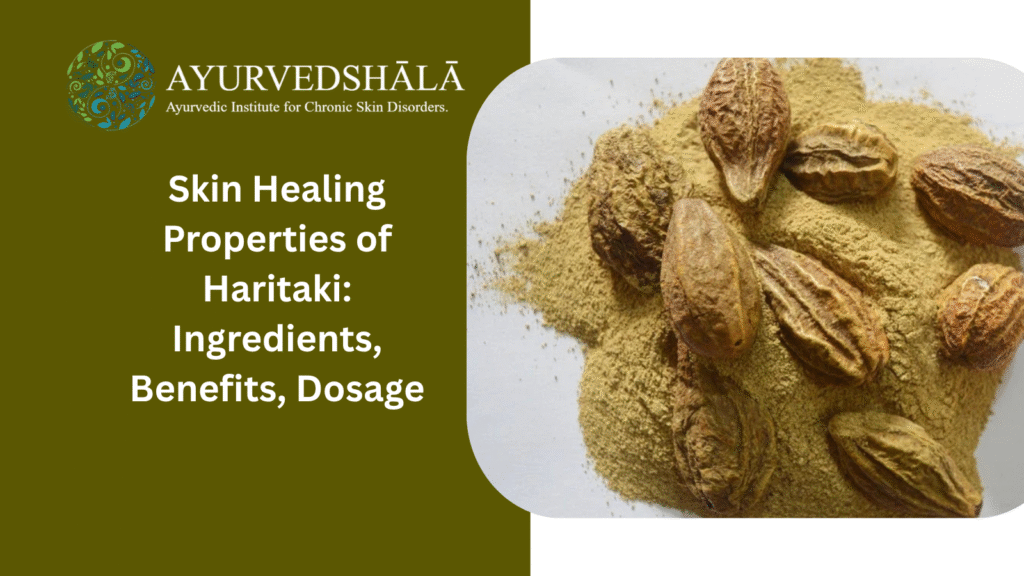
Haritaki, one of Ayurveda’s most celebrated single herbs, comes from the dried fruit of Terminalia chebula and has been a staple in holistic healing for millennia. Known as the “king of medicines” in the Charaka Samhita, haritaki is prized for its ability to balance all three doshas while gently cleansing the body. Its rich antioxidant and anti-inflammatory profile makes it a powerful ally for skin healing, helping to soothe irritation, reduce redness, and promote regeneration in conditions ranging from dryness to chronic inflammation—all naturally and safely.
B. Synonyms/Alternative Names
Also known as Harad, Chebulic myrobalan, Black myrobalan, Inknut, Harde, Karakkaya (Tamil), or Abhaya in Sanskrit.
C. Indications / Uses
1. Skin Conditions
Haritaki supports skin healing by purifying the blood (rakta shodhana) and reducing excess Pitta and Kapha in the skin channels. It is traditionally used for:
- Dry, flaky skin and eczema
- Inflammatory acne and rosacea
- Slow-healing wounds and minor burns
- Hyperpigmentation and uneven tone
2. Joint Health and Inflammation
Its anti-inflammatory tannins help ease joint swelling and stiffness, especially when skin issues are linked to systemic inflammation.
3. Metabolic Disorders
By improving digestion and metabolism, haritaki helps manage blood sugar and lipid levels—factors that influence inflammatory skin conditions.
4. Other General Health Benefits
- Detoxification: Clears ama (toxins) through mild laxative action.
- Anti-aging: High vitamin C content supports collagen synthesis.
- Immunity: Strengthens natural defenses against skin infections.
- Often combined with neem, turmeric, or Triphala for enhanced topical or internal skin support.
D. Composition / Ingredients
Haritaki consists solely of the dried fruit of Terminalia chebula Retz. Key active compounds include:
- Chebulagic acid & chebulinic acid (hydrolyzable tannins): Reduce inflammation and oxidative stress.
- Ellagic acid & gallic acid: Antimicrobial and wound-healing properties.
- Anthraquinones: Support gentle detoxification.
- Vitamin C, flavonoids, polyphenols: Boost skin repair and UV resistance.
E. Method of Preparation (Optional)
Traditional haritaki is wild-harvested from mature trees, sun-dried, and finely powdered. For skin use, it may be:
- Roasted lightly in ghee to reduce astringency.
- Boiled into a decoction with milk or rose water.
- Processed with sesame oil for topical pastes.
F. Dosage and Administration
- Adults: 1–3 grams powder (½–1 tsp) or 1–2 capsules (500 mg) daily.
- For skin healing: 1–2 grams at night with warm water or honey; apply paste (powder + aloe/ghee) to affected areas 2–3 times weekly.
- Children (5+ years): 500 mg–1 gram daily, under guidance.
- Best practices: Take post-meal with warm water or ghee. Use consistently for 4–8 weeks. Avoid long-term high doses.
G. Side Effects and Precautions
- Mild side effects: Loose stools or bloating if overused.
- Avoid in:
- Pregnancy or breastfeeding
- Severe diarrhea or dehydration
- Before surgery (may affect blood clotting)
- Do’s and don’ts: Stay hydrated; start with low dose; discontinue if gastric discomfort occurs. Consult a physician, especially with prescription skin medications.
H. Additional Benefits / Health Claims
Haritaki supports weight management by enhancing fat metabolism, helps lower uric acid in gout-related skin issues, and promotes scalp health to reduce dandruff. Ancient texts like Bhavaprakasha highlight its role in wound healing, while modern observations note improved skin hydration and reduced flare-ups in chronic cases.
J. Storage and Shelf Life
Keep in an airtight container in a cool, dry place. Shelf life: 2–3 years (powder), 3 years (tablets). Check for clumping or off-odor before use.
K. Conclusion
With its potent blend of antioxidants, anti-inflammatories, and detoxifying agents, haritaki offers a gentle, time-tested path to healthier, more resilient skin. Whether used internally or topically, it works holistically to heal from within. Always consult an Ayurvedic practitioner or dermatologist before beginning to ensure safe, effective integration into your wellness routine.